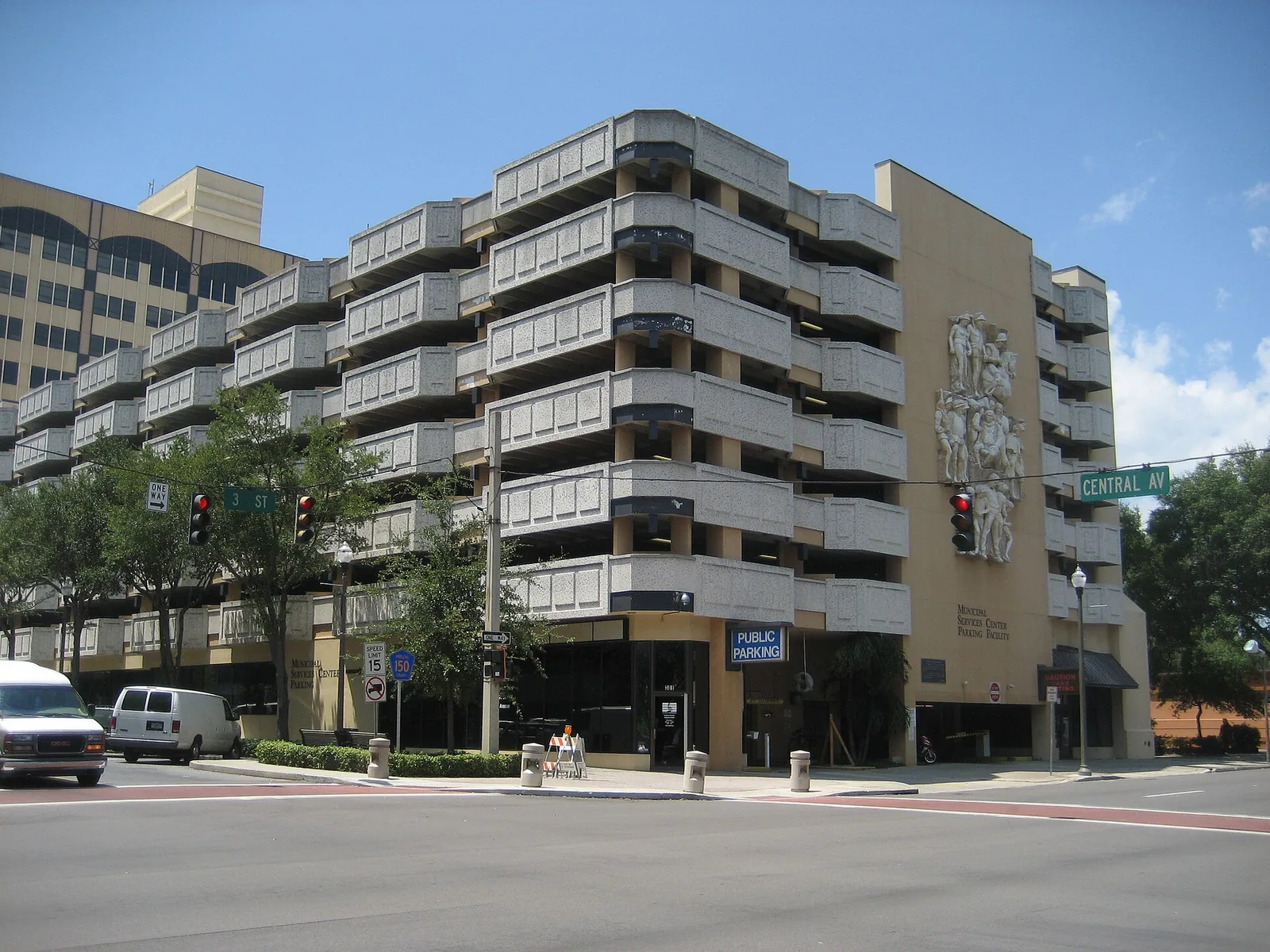
St. Petersburg permits are issued at the Municipal Services Center, One 4th St. N, and online. Call 727-893-7231. Look up zoning on the city GIS map.
Last checked Oct. 10, 2026. Facts on this page come from the City of St. Petersburg’s Building and Permitting and Planning and Zoning pages. Updated when the city changes its rules or hours.
St. Petersburg issues its own building permits; Pinellas County does not handle permits inside the city. The city’s Construction Services and Permitting Division reviews plans, issues permits and sends inspectors. Zoning questions go to Planning and Development Services, in the same building.
Who to call
- Permits and plans examiners: Permitting Office, 727-893-7231
- Electronic plan review help line: 727-893-7230, eplanreview@stpete.org
- General permit questions: permits@stpete.org
- City service center: 727-893-7111
- Where: Municipal Services Center, One 4th St. N
- Apply online: Click2Gov building permits
Office hours
The Building Department lobby at the Municipal Services Center is open 8 a.m. to 4 p.m. Monday, Tuesday, Thursday and Friday, and 8 a.m. to noon Wednesday, according to the city’s permitting page. You can book an appointment for the first-floor permitting area and wait in your car until your turn.
How to get a permit
- Check whether you need one. The city keeps a list of exempted work on its building permits page.
- Apply. Homeowners can apply in person at the Municipal Services Center; bring a photo ID and a floor layout. Larger projects are submitted electronically through the online portal, using the city’s residential or commercial plan review checklist.
- Fix any comments. Electronic applicants get 10 business days to finish uploads or answer comments; after that, the application is denied and has to be reactivated.
- Pay and build. Fees are set in the city code (Section 12-6).
- Schedule inspections online through the same portal.
Track a plan review by choosing “Select Permit” in the portal, entering the application number and opening “Plan Tracking Status.”
The city’s advice to homeowners: get the permit before you or your contractor start work, and hire a licensed contractor. Check a contractor’s license with the Pinellas County Licensing Board search.
The new $7,500 exemption
Under Florida House Bill 803, effective July 1, 2026, the city created a permit exemption form for work on a single-family home totaling less than $7,500. It applies only if:
- The home is not in a flood hazard area, and
- The work does not include structural parts (windows, doors, roofing, soffit and fascia or siding) or mechanical, electrical, plumbing or gas work.
Work already on the city’s exempt list does not need the form.
Storm repairs and the 49% rule
The city’s permitting after a storm page says a permit is required for all storm repairs, including drywall, floors, doors, cabinets and finishes. Removing wet drywall, carpet and cabinets, painting, putting new carpet over finished floors, temporary tarps and clearing washed-up debris do not need one.
Homes in the special flood hazard area fall under the city’s 49% rule: if the total cost of repairs or improvements reaches 49% of the building’s pre-damage market value, the whole building must meet current zoning, building and flood rules, which can mean elevating it. Check your flood zone on the Pinellas County flood map or FEMA’s map service center. The city says unpermitted repairs put the whole city’s 25% flood insurance discount at risk. Email storm damage photos to floodplain@stpete.org with your address and the storm name in the subject line.
Impact fees
The city collects impact fees only for transportation, under the countywide multimodal impact fee ordinance. A plans examiner calculates the fee after you apply; it is usually due before a certificate of occupancy for new construction, or before the permit for a change to an existing building. Redevelopment gets credit for the highest previous use since June 30, 1986.
Zoning
Zoning lives in Chapter 16 of the City Code, the Land Development Regulations, in effect since Sept. 10, 2007, and amended about twice a year. To find yours:
- Open the GIS zoning map lookup, let it zoom, and click inside your parcel.
- Use the city’s zoning handouts for the common questions: accessory dwelling units, fences, walls and hedges, sheds and carports, protected trees, short-term rentals and the neighborhood zoning summaries (NS, NT and NTM).
- The city also posts a residential zoning compliance calculator on the same page.
Zoning, variance, plat, driveway, historic and other applications are on the planning forms page and can be filed through the online planning portal or in person at Planning and Development Services, One 4th St. N.
Who decides
- Development Review Commission: hears development applications in public hearings; its page has the 2026 application deadlines, rules and a registered opponent form.
- Community Planning and Preservation Commission: hears planning and historic preservation cases; see its page.
- Appeals: a decision by either commission can be appealed on the city’s DRC and CPPC appeal form.
Meeting dates are on the city’s meeting calendar. Exterior work on a local historic landmark or in a local historic district may need a certificate of appropriateness; see the city’s historic preservation page.
What this means for you
- Look up your zoning on the GIS map before you buy, build or fence.
- Small, non-structural jobs under $7,500 may qualify for the new exemption form.
- In a flood zone, ask about the 49% rule before you plan a big remodel.
Related: property taxes, who to call at City Hall and St. Petersburg history and landmarks.
Frequently asked questions
Where do I get a building permit in St. Petersburg?
At the city’s Construction Services and Permitting Division in the Municipal Services Center, One 4th St. N, or online through the city’s Click2Gov permit portal. Call 727-893-7231.
Do I need a permit for small home repairs in St. Petersburg?
Since July 1, 2026, single-family work under $7,500 can be exempted with the city’s permit exemption form if the home is not in a flood hazard area and the work is not structural, roofing, windows, doors or mechanical, electrical, plumbing or gas.
How do I find my zoning in St. Petersburg?
Open the city’s GIS zoning map lookup, zoom to your parcel and click inside it. A pop-up shows the zoning district.
What is the 49% rule in St. Petersburg?
In the special flood hazard area, if repairs or improvements cost 49% or more of the building’s pre-damage market value, the whole building must be brought up to current flood and building rules, which can mean elevating it.
Have your say