Since July 1 the state made 470 first-visit inspections at St. Petersburg food businesses; 73% needed no further action. How Florida inspects and how to look one up.
Last checked Oct. 10, 2026. Figures come from the Florida Department of Business and Professional Regulation’s food service inspection file for District 3, downloaded Oct. 10, 2026, through the state’s public records page. Updated each month.
In Florida, restaurants are inspected by the state, not by Pinellas County. The Department of Business and Professional Regulation’s Division of Hotels and Restaurants licenses and inspects every public food service business. Florida gives no numeric scores or letter grades; each inspection lists violations and ends with an outcome.
Who to call
- Division of Hotels and Restaurants: 850-487-1395
- Look up a restaurant: MyFloridaLicense.com license search
- File a complaint: MyFloridaLicense.com
St. Petersburg since July 1
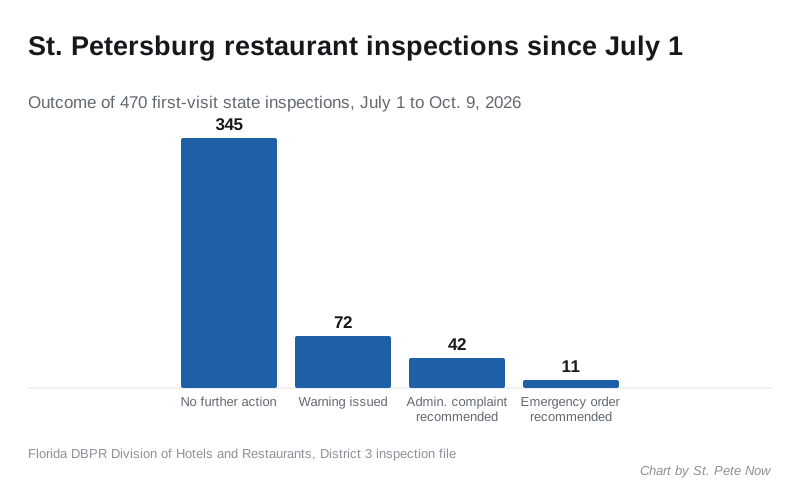
From July 1 to Oct. 9, 2026, state inspectors made 470 first-visit inspections at 457 food service businesses with St. Petersburg addresses in Pinellas County. Most were routine (390); 44 followed a complaint and 36 were licensing inspections. A St. Petersburg mailing address includes some places outside the city limits, such as Lealman.
| Outcome of the first visit | Inspections | Share |
|---|---|---|
| Inspection completed, no further action | 345 | 73% |
| Warning issued (a follow-up visit is set) | 72 | 15% |
| Administrative complaint recommended | 42 | 9% |
| Emergency order recommended (closure until fixed) | 11 | 2% |
228 of the 470 inspections, a little under half, found no high-priority violations. The middle inspection found four violations of all kinds. Countywide, the state made 1,642 first-visit inspections in Pinellas over the same period. Florida’s file lists outcomes, not the reasons a business was or was not closed, and a recommended action is not a final finding.
How to read an inspection
According to the division’s inspections page:
- High priority violations are those that could contribute directly to foodborne illness or injury.
- Intermediate violations could lead to those risks if not addressed.
- Basic violations are, in the state’s words, “considered best practices to implement.”
Each restaurant gets one to four unannounced inspections a year, depending on its risk: the type of food, how it is prepared and the business’s inspection and compliance history. Complaints can bring extra visits.
The outcomes:
- No further action: the inspection is complete.
- Warning issued: violations must be corrected by a set date, and the inspector returns.
- Administrative complaint recommended: the inspector recommended formal action, for example over high-priority violations or problems not corrected after an earlier visit.
- Emergency order recommended: the inspector recommended closing the business until violations are corrected. A callback visit shows whether it complied.
Look up a restaurant
Search any St. Petersburg restaurant by name or address on the state’s license search. The full inspection reports list each violation in the inspector’s words. The raw data, statewide and by district, is on the public records page; Pinellas County is in District 3, along with Hillsborough, Pasco, Polk and four other counties.
Method
We counted rows in the state’s District 3 file whose county is Pinellas, whose location city is St. Petersburg (in any spelling) and whose inspection date is July 1 to Oct. 9, 2026, using only first visits (visit number 1) so follow-ups are not counted twice. Complaint inspections combine full and partial complaint visits. Shares are rounded. We do not rank or name restaurants on this page; individual results are in the state’s records.
What this means for you
- Florida posts no grade to look for: check a restaurant’s latest report yourself.
- A warning means a return visit, not a closure.
- An emergency order is a recommendation to close until fixed; check the callback result.
- Report a problem to the state, not the city or county.
Related: new businesses in St. Petersburg and who to call at City Hall.
Frequently asked questions
Who inspects restaurants in Pinellas County?
The state. The Florida Department of Business and Professional Regulation’s Division of Hotels and Restaurants licenses and inspects restaurants, not the county health department.
Do Florida restaurants get a grade or score?
No. Florida lists the violations found and the outcome of each inspection, such as no further action, a warning or a recommended emergency closure.
How do I look up a St. Petersburg restaurant inspection?
Search the business name or address on the state’s MyFloridaLicense.com license search. Pinellas County is in the state’s District 3 inspection file.
What does an emergency order mean on a Florida restaurant inspection?
The inspector recommended that the business close until the violations are corrected. A callback visit shows whether it complied.
How do I report a restaurant in St. Petersburg?
File a complaint with the Division of Hotels and Restaurants through MyFloridaLicense.com or call 850-487-1395.
Have your say